
Investment Deduction (IAB) for Photovoltaics
This guide refers to German law and the German tax system. It is a translation of our German original and does not replace individual tax or legal advice.
Severance pay or other forms of extraordinary income usually come to employees at the end of their employment with a company. What at first glance sounds like a challenge for your own tax burden can become one of the biggest tax savings of your career. In this article, you will learn how to reduce your tax burden many times over with the Investitionsabzugsbetrag (IAB, investment deduction) through clever investment strategies – and what makes photovoltaic systems so attractive for investors receiving severance pay.
As an independent financial advisory firm, we support our clients in reducing their tax burden through investments in sustainable assets – in cooperation with experienced tax advisers and experts. Book a non-binding consultation and find out everything you need to know about IAB investments for your individual situation.
Acquiring PV systems as an employee
The payment of severance pay opens up numerous investment opportunities – many of them only after the surplus has been taxed. Without adequate planning, of €300,000, for example, only around €160,000 remains for private investment after tax. Unlike real estate, which must be depreciated, or most funds, photovoltaic systems qualify for the IAB under German tax law: the acquisition is taken into account in the same tax return as the extraordinary income, which massively reduces taxable income at the end of the year – in most cases to a neutral value. When acquiring IAB-eligible assets, the full amount of the severance pay is therefore available for the investment, while the PV system continues to generate income from electricity production beyond the investment itself.
Benefit from tax-optimised severance pay: PV systems as an investment
Unlike the one-fifth rule (Fünftelregelung), PV systems offer the opportunity to benefit from the effect of the IAB while delivering a predictable "solar pension" from the electricity generated over decades – with a return of around 7%, state-guaranteed and subsidised under the EEG (Erneuerbare-Energien-Gesetz, German Renewable Energy Sources Act). Although in the case of high income you can expect a special depreciation of the photovoltaic system, the profits over the depreciation period should not be underestimated: once claimed for tax purposes, the PV system generates monthly income as the former tax burden is transferred into private assets.
Neo Capital GmbH: your partner on the way to your PV system
How to invest one-off payments correctly raises questions for many employees. To ensure you receive the best possible advice for your investment approach, our experts are at your side from planning through to follow-up – working daily with the tax-saving model of the classic PV system as an IAB investment. Would you like advice on your individual situation? We offer you a non-binding initial consultation with one of our experts to assess together whether and how tax optimisation through an IAB can pay off.
Frequently asked questions
I have already received my severance pay: can I still optimise my taxes?
Yes, our clients are at different stages on the way to their own PV investment. It does not necessarily matter whether you are looking ahead to an upcoming severance payment or have already received it. We will be happy to explain in a consultation which factors besides your income tax return are decisive.
Why are PV systems a good investment?
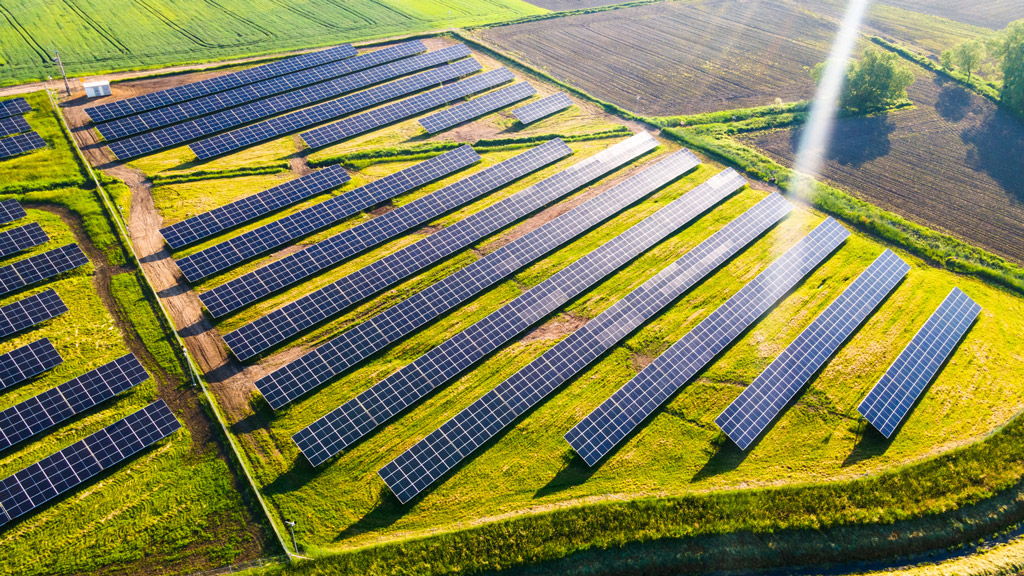
In addition to sustainable energy generation and the solar pension, photovoltaic systems receive favourable tax treatment via the Investitionsabzugsbetrag (IAB, investment deduction): the costs of acquisition and commissioning can be claimed for tax purposes in the same year as high income. The legislator guarantees the return for 20 years on the basis of the EEG, which creates predictability. A 200 kWp system with a specific yield of 900 kWh/kWp produces around 180,000 kWh/a, which corresponds to a CO₂ saving of approximately 104.86 tonnes per year – mathematically the electricity demand of around 54 three-person households.