
ETS-2 and Property Investment: Tax Optimisation and Protecting Returns through Forward-Looking Structuring
This guide refers to German law and the German tax system. It is a translation of our German original and does not replace individual tax or legal advice.
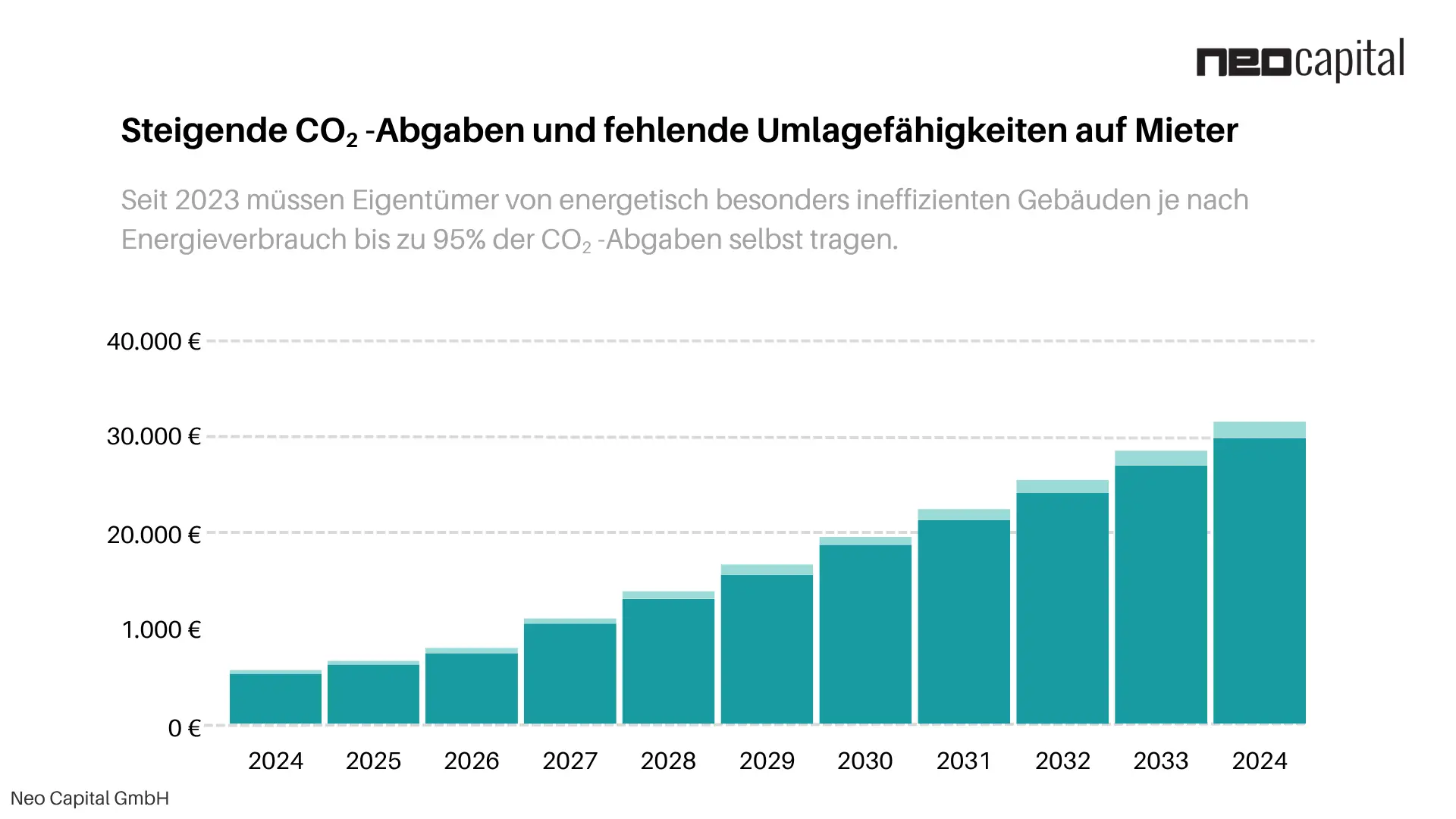
The new European emissions trading system ETS-2 marks a profound turning point for private property investors. From 2027, private buildings will also be included in CO2 emissions trading, which in practice means fossil fuels – and therefore the running costs of properties – will become more expensive. Anyone planning to invest capital in property over the coming years should factor this regulatory framework into their considerations from the outset. Cost structures in the property market are set to shift fundamentally, with noticeable effects on returns, value retention and the scope for tax planning.
For high-net-worth individuals, this creates a twofold challenge. On the one hand, there is a risk that energy-inefficient existing properties will lose appeal or become difficult to let because of rising service charges. On the other hand, new opportunities arise when capital is deliberately directed into energy-efficient new builds or modernised existing properties that are not only protected from a regulatory perspective but also offer tax advantages. Those who act early can use ETS-2 as a catalyst for an investment that is optimised for the long term.
Energy efficiency as the key driver of returns
With the introduction of ETS-2, a property's energy performance becomes the decisive factor for its value development. Whereas location and rental yield have traditionally taken centre stage, heating systems, insulation standards and the CO2 footprint are now moving to the forefront. An energy-inefficient property means not only higher running costs but also a growing risk of losses in value, particularly as government requirements and rising environmental awareness lead the market to place more emphasis on sustainability. Investors who continue to rely on unrenovated properties risk negative returns in the medium to long term.
Energy-efficient properties, by contrast, offer several advantages at once. They are not only cheaper to maintain and more attractive to tenants but are also increasingly favoured by banks when it comes to financing. Owners also benefit from stronger demand and stable prices if they sell later on. Investors who direct their capital into future-proof properties today therefore secure not only their returns but also long-term value stability. Energy efficiency is thus no longer a "nice-to-have" but the key driver of returns in the age of ETS-2.
Using tax levers: depreciation and subsidies
Alongside conventional return considerations, tax advantages play an increasingly decisive role in property investment. High-quality, energy-efficient properties open up access to special depreciation allowances (Sonderabschreibungen), for example under Section 7b of the German Income Tax Act (EStG), and to government funding programmes such as those of the KfW (Germany's state-owned development bank). These tax instruments allow investors to claim a substantial part of their investment costs for tax purposes more quickly. This lowers the ongoing tax burden while the after-tax return rises – an advantage that conventional existing properties without energy-efficient renovation do not offer.
Combinations of tax depreciation and subsidies are particularly attractive. For example, anyone investing in a KfW efficiency house (KfW-Effizienzhaus) can benefit not only from low-interest loans but also from special tax depreciation. This double leverage makes high-quality, energy-efficient properties a particularly lucrative form of investment. What matters, however, is early and expert planning, because many programmes have limited quotas or are tied to specific requirements. A specialist adviser can ensure that investors make full use of all available tax advantages.
Identifying risks early and consistently seizing opportunities
ETS-2 is far more than just an additional burden for property owners; it represents a transformation of the entire sector. Anyone investing in energy-inefficient properties today exposes themselves to considerable risk: losses in value, rising running costs and falling demand can severely impair returns. Early analysis and a clear strategy are therefore essential, not only to avoid these risks but to actively turn them into opportunities. After all, those who back the right properties can even benefit from regulatory requirements.
The skill lies in not viewing risks in isolation but including them in the overall calculation. Rising CO2 costs can thus be more than offset by tax advantages, subsidies or targeted renovation strategies. Close collaboration with experts who continuously monitor regulatory developments and make targeted use of tax planning options is crucial. Investors who take this route gain a head start in the market and not only protect their investments against risks but actively develop them further.
Conclusion: ETS-2 as a catalyst for sustainable property strategies
The ETS-2 emissions trading system marks a turning point in the property market that investors cannot ignore. Instead of short-term return optimisation, the strategic selection of future-proof properties takes centre stage. Energy-efficient properties not only offer protection against losses in value but also open up tax advantages that can significantly increase the overall return. Those who position themselves in good time can use ETS-2 as a catalyst for a new, sustainable investment strategy.
In concrete terms, for high-net-worth individuals this means that the key to success lies in a smart combination of tax optimisation, energy performance and strategic structuring through corporate forms such as a GmbH (German limited liability company) or a holding company. This creates a system that not only offers short-term tax advantages but also protects returns and wealth over the long term. Those who act today lay the foundation for stable investments in the regulatory environment of the coming decades.
Frequently asked questions
What does ETS-2 mean in concrete terms for private property investors?
From 2027, private buildings will also be included in emissions trading. For owners of inefficient properties, this means higher CO2 costs that must either be borne by themselves or passed on to tenants. Efficient properties gain in value and appeal as a result.
What tax advantages do energy-efficient properties offer?
In addition to regular depreciation, special depreciation (Section 7b EStG) and subsidies from the KfW or BAFA (Federal Office for Economic Affairs and Export Control) can be used. These reduce the tax burden considerably and increase the after-tax return on the investment over many years.
How do energy-efficient renovations affect returns?
Renovations increase investment costs in the short term but secure the property's value in the long term and reduce CO2 costs. Thanks to tax depreciation options, many measures pay for themselves faster than investors expect.
What role does advice play in ETS-2-related investments?
The effects of ETS-2 are complex and concern both tax law and property valuation. Neo Capital helps to develop individual strategies, make full use of tax advantages and avoid risks.