
Financial Planning for Entrepreneurs: How Structure, Tax and Wealth Strategy Work Together
This guide refers to German law and the German tax system. It is a translation of our German original and does not replace individual tax or legal advice.
Business decisions and private wealth planning are inextricably linked. While turnover grows, markets change and investments are made, in many cases there is no clear overall strategy that sensibly connects business liquidity, private assets and the tax framework. This is precisely where professional financial planning comes in. It creates transparency, reduces risks and makes it possible not only to build wealth but to manage it in a targeted way.
For entrepreneurs, the self-employed and managing directors, this means today more than ever not making financial decisions in isolation but thinking holistically. Neo Capital supports clients in analysing their financial situation in a structured way and developing a long-term strategy from it that ensures both entrepreneurial freedom and private security.
Keeping liquidity, risk and wealth in balance
A central component of any financial planning is managing liquidity. Entrepreneurs regularly face the challenge of allocating funds between the business, investments and private withdrawals. Without a clear structure, inefficient capital commitments or unnecessary tax burdens often arise. Well-thought-out planning ensures that sufficient liquidity is available at all times without capital being tied up unproductively.
At the same time, risk protection plays a decisive role. While companies are protected against operational risks, personal earning capacity or private assets often remain inadequately protected. Structured planning therefore integrates protection concepts into the overall picture and ensures that financial stability is maintained even in the event of unexpected events.
Tax optimisation as a strategic lever for entrepreneurs
Tax structuring is one of the most important levers in building wealth. Compared with conventional employees, entrepreneurs have considerably more scope for structuring but often do not make consistent use of it. Professional financial planning therefore takes into account income structure, withdrawal strategies, investments and long-term wealth goals in order to optimise the tax burden on a sustainable basis.
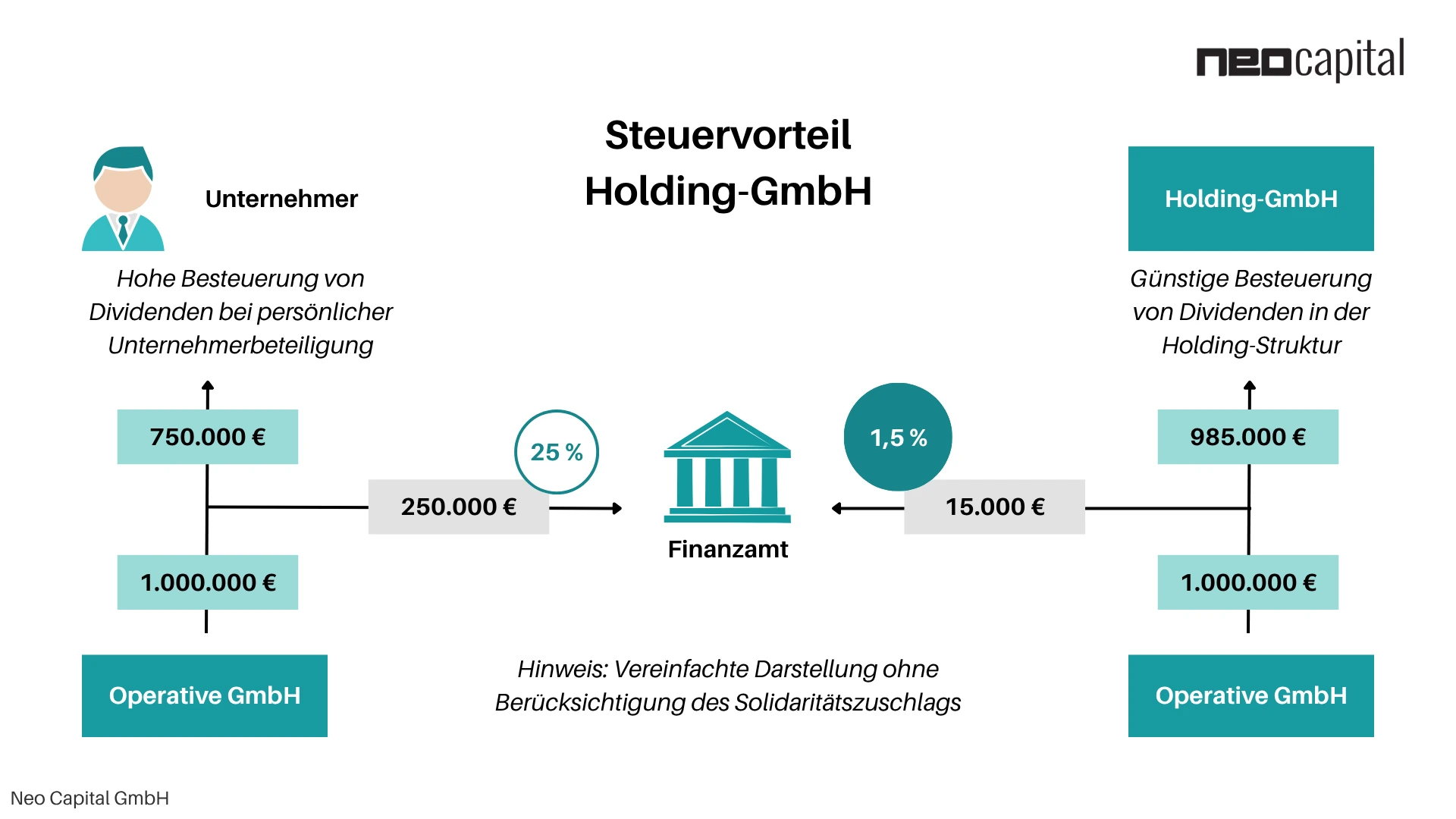
Considerable advantages can be realised particularly in the interplay between business profits and private investments. Through targeted planning, capital can be allocated efficiently between the business and wealth building, so that tax burdens are reduced while assets are built up at the same time. What matters is not the individual measure but the interplay of all factors within a clear overall strategy.
Aligning investment decisions and asset structure in a targeted way
Alongside liquidity and tax, choosing the right forms of investment is another central building block. Entrepreneurs often have one-sided asset structures, as a large part of their capital is tied up in their own company. Professional planning creates balance here by integrating additional asset classes such as property or capital market strategies.
The aim is a balanced asset structure that enables both stability and growth. Individual factors such as risk appetite, time horizon and dependencies on the business are taken into account. Neo Capital works with clients to develop strategies that are sustainable over the long term while remaining flexible enough to respond to change.
Retirement planning and long-term wealth preservation
For entrepreneurs, retirement planning is a particularly sensitive area, as there is no automatic cover through statutory systems. At the same time, the expectation that one's own company will later secure retirement provision is associated with considerable uncertainty. Structured planning ensures that alternative wealth components that function independently of the company are built up at an early stage.
This is not just about conventional pension models but about a strategic combination of different forms of investment that deliver stable income over the long term. This creates wealth that not only enables growth but also offers security in later stages of life.
A holistic financial strategy with Neo Capital
Financial planning for entrepreneurs is not a one-off process but an ongoing strategic task. Markets change, tax frameworks are adjusted and personal circumstances evolve. What is crucial, therefore, is a structure that remains flexible and is reviewed regularly.
Neo Capital helps entrepreneurs to take a holistic view of their overall financial situation and derive clear recommendations for action from it. Close collaboration with tax advisers and other specialists produces a strategy that is not only convincing in theory but can be implemented in practice. If you do not want to leave your wealth to chance but manage it strategically, now is the right time for structured financial planning. Your entrepreneurial freedom begins with clear financial decisions.
Frequently asked questions
What exactly does financial planning for entrepreneurs involve?
Financial planning for entrepreneurs combines business and private aspects into a holistic strategy. It covers liquidity management, tax optimisation, wealth building, risk protection and retirement planning. The aim is to coordinate all financial decisions so that capital is used efficiently and wealth is built up over the long term.
Why is financial planning particularly important for entrepreneurs?
Entrepreneurs not only bear business risks but are also more affected by fluctuations in income. Without structured planning, tax disadvantages, inefficient investments or a lack of protection often arise. Professional financial planning creates clarity here and ensures stability and long-term wealth building.
What role does tax optimisation play in financial planning?
Tax optimisation is a central component of financial planning, as it has a direct influence on available liquidity. By strategically structuring income, investments and withdrawals, tax burdens can be reduced while assets are built up at the same time. What matters is long-term planning, not short-term tax savings.
When should you start financial planning?
Ideally, financial planning should begin as early as possible, especially once regular profits are being generated. The earlier a clear structure is established, the greater the long-term effect on wealth building and tax optimisation. At the same time, the plan should be reviewed regularly and adapted to changing circumstances.