
Usufruct (Nießbrauch) in Property Transfers – Focus on Tax Optimisation and Legal Structuring
This guide refers to German law and the German tax system. It is a translation of our German original and does not replace individual tax or legal advice.
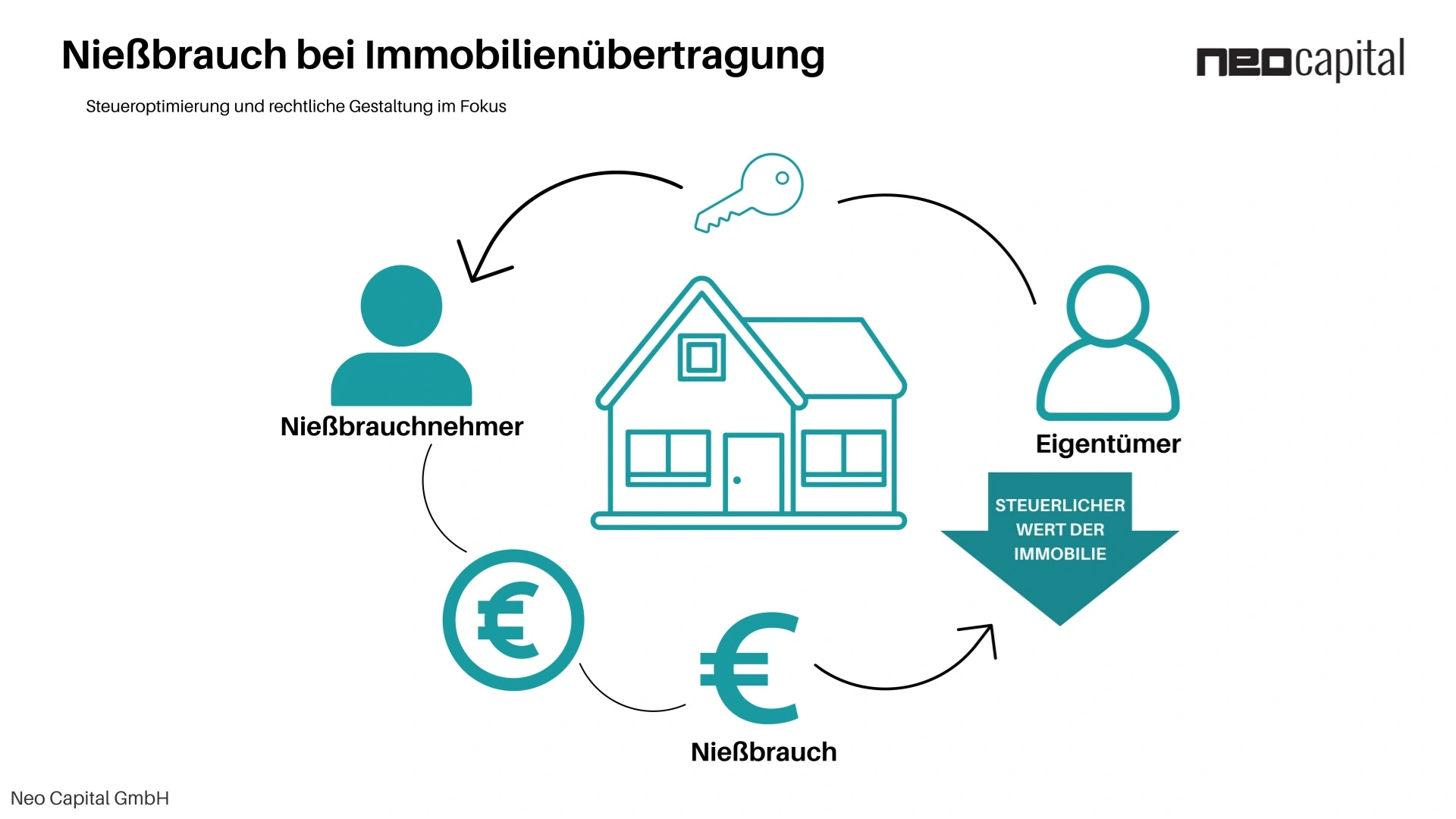
Transferring property while reserving a usufruct (Nießbrauchsvorbehalt) is one of the most effective strategies for tax-optimised succession planning. Ownership is transferred to another person – for example your own child – while the previous owner retains the economic right of use (usufruct, Nießbrauch). This structure reduces the value of the gift relevant for tax purposes, secures lifelong income for the transferor and creates clarity within the family – particularly when handing over let investment properties.
For wealthy private individuals, entrepreneurs and property investors, usufruct is not only a means of arranging family succession, but also a strategic tax instrument. Neo Capital GmbH supports clients in structuring property transfers with usufruct with legal certainty and coordinates tax and legal questions closely with notaries and tax advisers.
Usufruct reduces the tax value of the property – and thus the tax burden
The central effect of usufruct lies in the reduction in value of the property at the time of the gift: since the usufructuary – often the transferring person – continues to benefit economically from the property, the value to be recognised for tax purposes for the recipient is reduced. The lower the property value applied, the more wealth can be transferred tax-free without exceeding the tax-free allowances. The exact reduction depends on the life expectancy of the usufructuary: the tax office (Finanzamt) calculates the capitalised value of the usufruct using standardised tables (Section 14 of the German Valuation Act, BewG, in conjunction with Section 55 of the Income Tax Implementing Ordinance, EStDV) – the younger the usufructuary and the longer the expected period of use, the greater the deduction from the total value of the property to be recognised for tax purposes.
Usufruct for let investment properties
Usufruct is particularly effective for let properties, because here there is not just a pure transfer of assets, but also a concrete flow of income in the form of rental income – in the case of a gift with reserved usufruct, this continues to belong to the donor. At the same time, the usufructuary bears typical running costs such as service charges (Hausgeld), maintenance or insurance, which can be offset against the rental income for tax purposes. The donor remains economically responsible, while formal ownership passes to the recipient. It becomes more complex with an outstanding loan: the usufructuary remains obliged to bear the interest; if the donor also takes over repayments, this is treated for tax purposes as an ongoing gratuitous benefit, which may be relevant for the recipient.
Plan strategically, implement with legal certainty
The success of a usufruct structure stands or falls with careful contractual drafting: the scope and commencement of the usufruct, the rights and obligations of the usufructuary (such as maintenance, letting, management), the arrangements for reversion on death or waiver, and the treatment of encumbrances and financing costs must be clearly defined. A frequently underestimated point is that the property cannot be sold without the consent of the usufructuary – this legal safeguard preserves economic control even after the legal transfer of ownership, which ensures long-term stability, especially for family properties. In addition, notarisation of the transfer and registration of the usufruct in the land register (Grundbuch) are recommended to ensure full legal effectiveness and protection against third parties.
Conclusion: usufruct as a smart tool for transferring wealth
Transferring property while reserving a usufruct is far more than a tax measure – it combines asset protection, income planning and estate planning in one flexible structure. Those who start planning early can make full use of tax-free allowances, reduce the tax burden and at the same time secure income. Neo Capital GmbH supports property owners, entrepreneurs and wealthy families in structuring property transfers with legal certainty, in a tax-optimised way and in line with family needs – in close cooperation with tax advisers and notaries.
Frequently asked questions
What does usufruct mean for real estate?
Usufruct is the right to use a property economically without being its owner. In a gift with reserved usufruct, ownership is transferred to another person, while the donor retains the rental income and rights of use.
What tax advantages does usufruct offer?
The tax value of the property is reduced considerably by the usufruct, as the capitalised value of the right of use is deducted from the market value. This lowers the assessment basis for gift or inheritance tax, which can lead to significant tax savings.
How is the value of the usufruct calculated?
The tax office calculates the capitalised value of the usufruct on the basis of the life expectancy of the usufructuary (Section 14 BewG in conjunction with Section 55 EStDV) and the annual income. The younger the entitled person, the higher the capitalised value – and the more the taxable property value falls.
Is usufruct also suitable for let properties?
Yes, usufruct is particularly attractive for let investment properties. The donor retains the rental income, can claim income-related expenses (Werbungskosten) and remains financially secure, while ownership is transferred to the next generation in a tax-optimised way.
What happens if the property is still financed?
With outstanding loans, the usufructuary usually bears the interest. If they also take over repayments, these may be treated for tax purposes as ongoing benefits to the recipient. Careful structuring and coordination with a tax adviser and notary are necessary here.
Does usufruct have to be notarised?
Yes. For the usufruct to be legally effective and secured in the land register, it must be notarised and registered. Only then does the usufruct enjoy full legal certainty with respect to third parties.
For whom is a usufruct structure worthwhile?
Above all for wealthy private individuals, entrepreneurs and property investors who wish to transfer wealth tax-efficiently while at the same time securing income and clearly arranging their succession.