
When the Gift Notification Requirement Does Not Apply – Current Rules and Future Developments
This guide refers to German law and the German tax system. It is a translation of our German original and does not replace individual tax or legal advice.
In Germany, gifts must in principle be reported to the tax office (Finanzamt) so that any gift tax (Schenkungsteuer) can be levied. This notification requirement (Anzeigepflicht) ensures that the tax office can monitor all gifts relevant for tax purposes and tax them accordingly. The notification must be made within a certain deadline in order to avoid tax consequences. Heirs must also inform themselves about their tax obligations in connection with the inheritance in order to avoid legal difficulties and possible penalties. However, there are some exceptions in which the notification requirement for gifts does not apply, which can be advantageous for many transfers of wealth within the family. Which gifts are currently not subject to notification, and how could future legislative changes affect the notification requirement?
For wealthy private individuals and entrepreneurs who regularly transfer assets, handling the notification requirement correctly is an essential part of tax planning. In cooperation with tax advisers and notaries, Neo Capital GmbH supports its clients in complying with tax requirements and making optimal use of opportunities to transfer wealth within the family – without unforeseen tax burdens caused by a forgotten notification.
Notification requirement for gifts – when does it not apply?
In principle, there is a statutory notification requirement for gifts in Germany, governed by Section 30 of the German Inheritance and Gift Tax Act (ErbStG, Erbschaftsteuer- und Schenkungsteuergesetz). According to this provision, both the donor and the recipient must report a gift to the tax office if its value exceeds the allowance or if the gift is not made within the scope of a customary relationship. This must be done within three months of becoming aware of the gift. This applies in particular to large transfers of wealth on which gift tax could potentially become due.
Exceptions to the notification requirement
However, there are certain gifts for which the notification requirement does not apply. A gift does not have to be reported if:
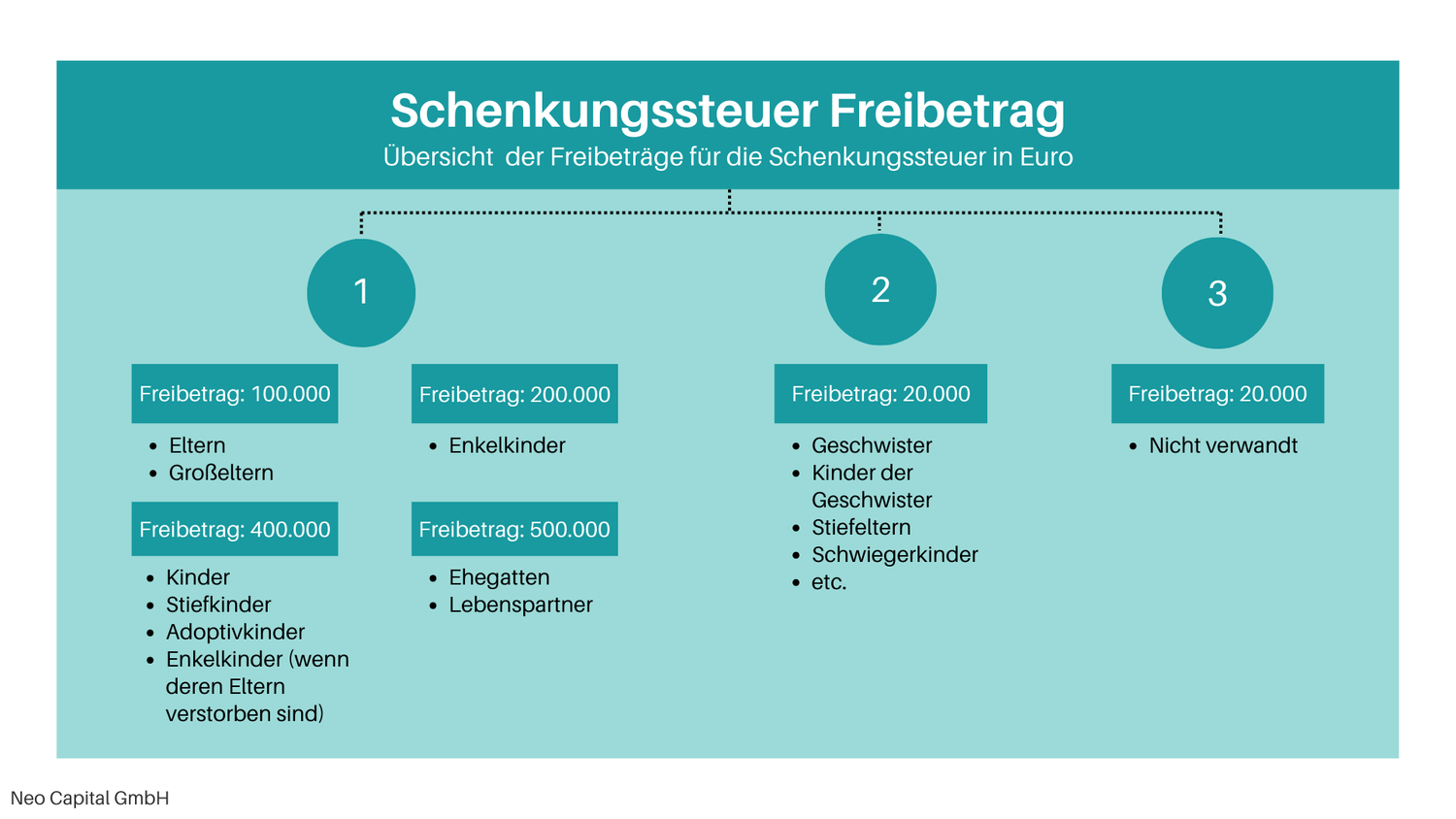
- The amount of the gift remains below the recipient's personal allowance. For example, gifts to children of up to €400,000 within ten years are possible tax-free – these gifts do not have to be reported as long as the allowance is not exceeded. A gift of money also falls under this rule if it remains within the allowances.
- The gifts are of low value or are customary occasional gifts. Examples include birthday and Christmas presents as well as smaller tokens of appreciation that are in reasonable proportion. This type of gift is also exempt from the notification requirement.
- Payments are made to the spouse or civil partner that lie within the usual household or family framework. Here, too, there is no notification requirement, provided the gift does not take place outside the usual framework.
Future developments and legislative changes regarding the notification requirement for gifts
In the past, gift tax and, with it, the notification requirement for gifts have repeatedly been influenced by political reforms. Legislative changes that could affect the reporting obligation for gifts may also be expected in the coming years. Future reforms that further adjust the allowances and notification requirements in the area of inheritance and gift tax could be particularly relevant, in order on the one hand to prevent tax evasion and on the other to make tax-privileged transfers of wealth more transparent. Both the donor and the recipient must report the gift, particularly if the personal allowance is exceeded.
Raising the allowances
One possible adjustment could include increasing the allowances. If the allowances were raised, it would be possible to transfer larger sums tax-free and without a notification requirement, which would simplify many transfers of wealth. However, the acquisition must still be reported to the tax office, particularly if there is a will or a notification requirement exists. Such a reform would reduce the pressure on the tax office to monitor small and medium-sized gifts, as these amounts could then be absorbed by the higher allowances.
Stricter reporting obligations for large gifts
On the other hand, stricter reporting obligations could be introduced for large gifts. For particularly high-value assets, more comprehensive documentation and reporting obligations could be required in future in order to increase transparency in large transfers of wealth. This could apply in particular to gifts of several million euros or to the transfer of business assets.
Neo Capital GmbH offers its clients ongoing support in monitoring such changes and their effects on gift planning. For particularly high-value assets, a tax return may also be required in order to meet the statutory obligations and optimise the tax burden. By working closely with tax advisers, the company ensures that clients are always informed and can handle possible adjustments to the notification requirement in the best possible way for tax purposes.
Tax structuring options where no notification is required
For private individuals and entrepreneurs planning gifts on a larger scale, it is important to make use of all tax structuring options and to keep the notification requirement in view. Otherwise, the tax office may regard the failure to report as tax evasion, which can lead to high fines and, in extreme cases, even prison sentences. In cooperation with Neo Capital, gifts below the allowance can be planned and made at regular intervals in order to avoid notification requirements while minimising the tax burden.
Staggered gifting in a ten-year cycle
By using the ten-year gift cycle, assets can be transferred tax-free without the need to report to the tax office. The allowance is used in full, so that over decades substantial assets can pass to the next generation tax-free and without a reporting obligation.
Strategic use of occasional gifts and low-value gifts
For owners of wealth, it is also advisable to use occasional gifts and smaller gifts strategically. By combining allowances and occasional gifts that are not subject to reporting, assets can be transferred on an ongoing basis and tax-free without giving rise to a notification requirement. This strategy is particularly suitable for wealth that is to be passed on in stages in the form of liquid assets such as cash or securities.
Neo Capital supports its clients in building a long-term gifting strategy and in making targeted use of the legal framework.
Effects of potential legislative changes and Neo Capital as your partner
As gifts play an increasingly important role in wealth succession, gift tax remains a topic of political debate. In future, stricter reporting requirements and closer scrutiny by the tax office could be introduced in order to make tax-free transfers more transparent. Large gifts or transfers of wealth that are repeatedly kept below the allowance and therefore remain tax-free would be particularly affected.
The importance of legal advice
Professional tax and legal advice will therefore become even more important in future in order to keep track of the legal situation and future changes. Neo Capital GmbH supports clients in structuring tax-optimised gifts and, together with tax advisers and notaries, develops a long-term strategy for using gift tax allowances.
Keeping an eye on legal developments
In view of possible legislative changes, it is advisable to find out about adjustments to the notification requirement at an early stage. Neo Capital supports its clients with forward-looking planning and focuses on securing wealth within the family and making optimal use of tax advantages. In this way, future changes to the notification requirement can be taken into account efficiently and tax burdens minimised.
Conclusion: when the gift notification requirement does not apply – making targeted use of tax-free gifts
The notification requirement for gifts presents both opportunities and challenges for owners of wealth. Through targeted use of the allowances and strategic staggering of gifts, tax-free transfers can be structured without giving rise to a notification requirement. However, future legislative changes could tighten the reporting obligations for larger gifts, which is why it is important to keep an eye on tax developments.
Our experts at Neo Capital GmbH offer you tailor-made advice to enable a tax-optimised gifting strategy. Through careful planning and implementation in cooperation with tax experts, assets can be transferred with legal certainty and tax-free – with the aim of securing your family's wealth in the long term and making full use of tax advantages. Contact us for a no-obligation consultation and find out how a tax-optimised gift can be structured in your case.